by David Williamson – – –
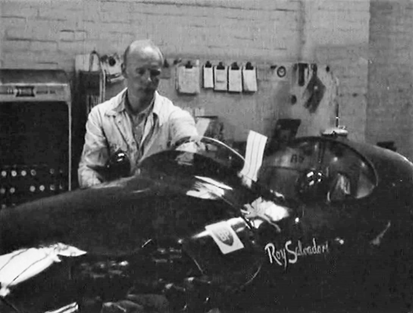
I was 14 on that warm January afternoon in Auckland in 1958, when, together with my mate Tom, we rode our bikes to Newmarket. We were hunting … looking for Grand Prix cars stored in the many car-sales showrooms along Great South Road, as we awaited the upcoming NZIGP at Ardmore. We rode slowly, looking into the various showrooms and workshops. Suddenly, barely visible through a half-opened garage door, we discovered not one, but three F1 racing cars. Jackpot! Wandering into the dimly lit workshop, we saw a young fair-headed mechanic changing jets on the Weber carbs of one of two English Connaughts.
These cars, recently purchased by Bernie Ecclestone, and shipped for the NZ races, were to be driven by top UK drivers Stuart Lewis-Evans and Roy Salvadori. There were two different models: a type B3, known as the “Dart” also described as the “Toothpaste tube” because of its unusual body shape.
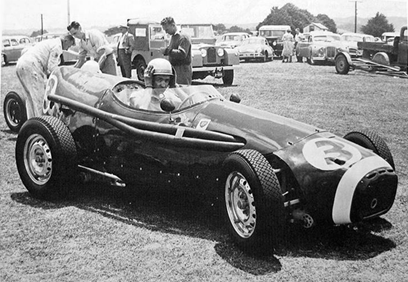
The Salvadori car was an earlier B type, similar to the car that Tony Brooks drove to win the 1955 F1 GP in Syracuse. Also parked at the back of the workshop was the Lister-Jaguar of Archie Scott-Brown, the incredibly talented UK driver who drove like a champion despite being handicapped because of childhood operations on his legs and a malformed and much-shortened right arm.
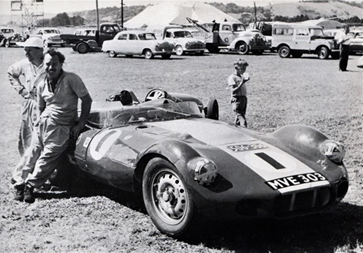
As we walked into the workshop, the mechanic looked at us, gently saying: “Ok boys, you can stay and watch, but please, you mustn’t touch anything.” It wasn’t what 14-year-old boys normally heard when in similar situations. As we chatted, I learned he was over from the UK, working as a mechanic for Bernie Ecclestone’s two cars. He told us how much he liked Auckland and was looking forward to seeing more of the country. A quiet man, he was obviously respected enough at his craft to be entrusted to look after these great cars. In the next two weeks, they raced in the 1958 NZIGP at Ardmore. Stuart Lewis-Evans retired with low oil pressure and Roy Salvadori finished fifth. Sadly, with only three laps to go whilst in third place, Archie’s Lister-Jaguar broke a kingpin and retired.
I was curious about the mechanic we met that day, and in recent times I started to learn more about him. His name was Rod Dore, and I discovered that while he was working as a mechanic for a UK Alfa Romeo race team, his hobby was building and driving stock cars. Rod began his stock car racing career in 1960 at tracks such as Harringay Stadium, a tarmac-sealed track 10kms from Rod and his wife Megan’s home in Mill Hill, northwest London. In 1960, he paid 25 pounds for a wrecked Fiat 600 and promptly sold all the running gear. He then mounted the tiny body onto a much-modified Bedford chassis and installed an Oldsmobile “Rocket” V8 motor. From his earlier days when working for Vanwall, he somehow still possessed a spare gearbox from the “Thinwall Special” – the box had come from a Ferrari Super-America. The car even ran second-hand F1 Dunlop R-7 racing tyres.
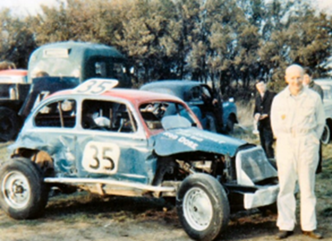
He raced at Walthamstow, close to his home and later raced at Bradfield Speedway in Northampton and at Cadwell Park, Matcham’s Park, West Ham, Southampton and Norwich tracks. His talents were soon spotted by Ken McAlpine, owner of the Connaught F1 team, and later on by Tony Vandervell of Vanwall fame.

He travelled all over Europe with both teams during those days, seeing a lot of the continent. Rod also appeared as an extra in the 1961 movie The Green Helmet. In one scene, Rod is clearly visible as he refuels a D-type Jaguar in the pits.
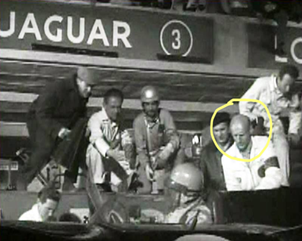
From Morris Oxfords to Chevs, Rod cleverly built the best stock cars he could, using well-thought-out ideas. Light and strong and fast, they gave him much success around the UK. He then came to NZ in late 1967 and built a Blue Flame-powered lightweight Chev coupe for his first meeting. Rod drove carefully but quickly. Keeping his nose clean, he achieved many wins during the season. However, within three months, Rod sold the Chev and went back to the UK. In the early 1970s, Rod came back to NZ and worked for McLaren Motors in Te Atatu, building another Chev to race. After a couple of years racing, Rod stopped racing and returned to the UK.
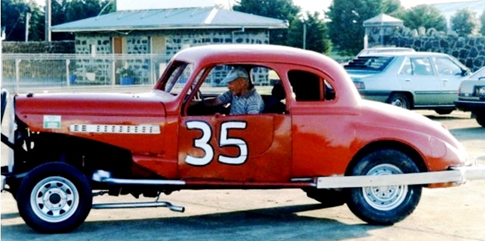
By the mid-1990s, Rod had retired and – once again – came back to NZ, this time to live. In 1997, while attending a race meeting at Waikaraka Park he bought a raffle ticket – and won first prize, which was to drive a few laps in a stock car. This quickly rekindled his earlier passion and motivated him to re-create his 1967 Chev stock car, which he then ran at historic meetings around NZ, until he died at 73 in Auckland in 1999. If only I’d known Rod lived in NZ, I’d love to have met him again.
Postscript
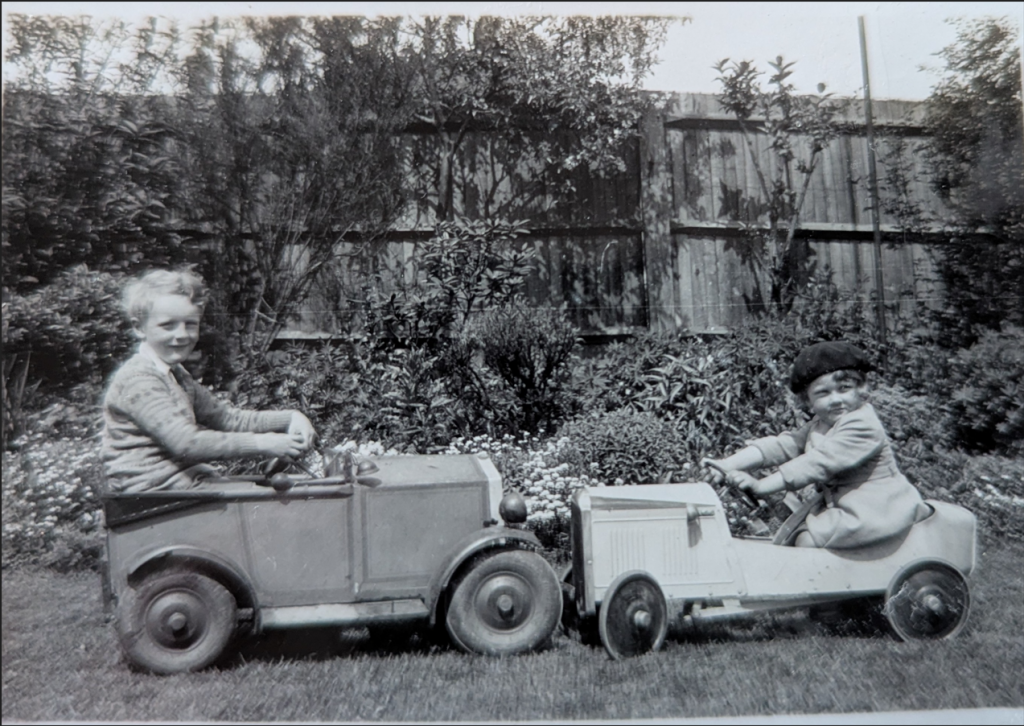
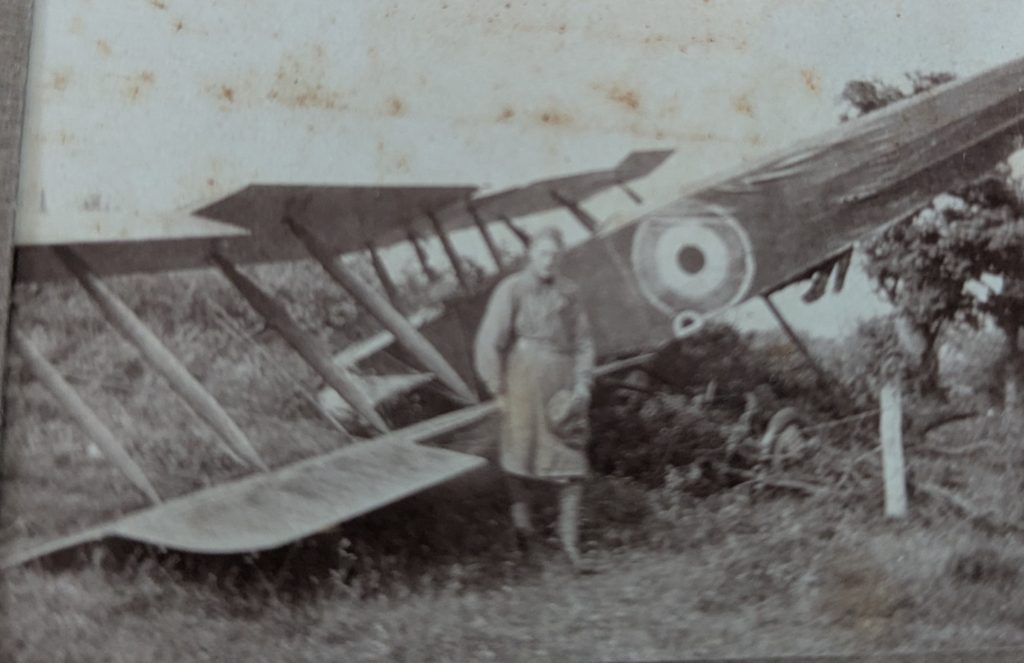
Some additional photos, supplied with thanks, by Rod’s niece, Kirstie: