
by John Murn – – –
History:
My Decca Major was built in Victoria and has lived in NSW for many years, yet its history starts in South Australia with Derek Jolly. Derek, nickname ‘Decca’, was a well-known figure in Adelaide society and a capable steerer, initially of an Austin 7 special. In the mid ’50s, Jolly travelled to the UK and spent time working for Colin Chapman. Jolly was good enough to share a Lotus 15 with Graham Hill at Le Mans in 1959.
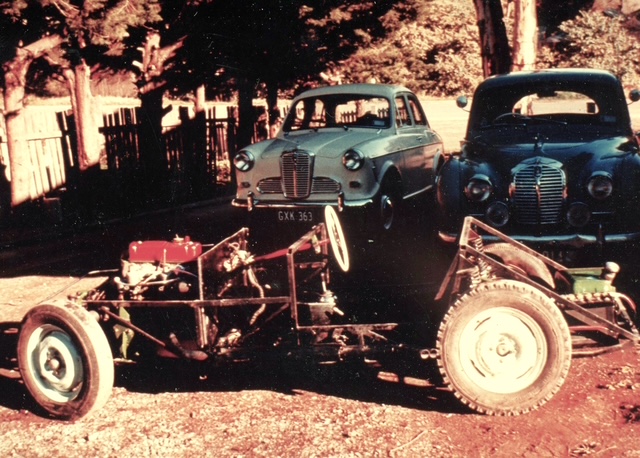
When Jolly returned to Australia, he set about building his own version of a Lotus 11, using his many skilled automotive contacts in Adelaide. The Climax-engined Decca Special was raced with great success all over Australia, towed to the races behind Jolly’s Jaguar XK140 coupe.
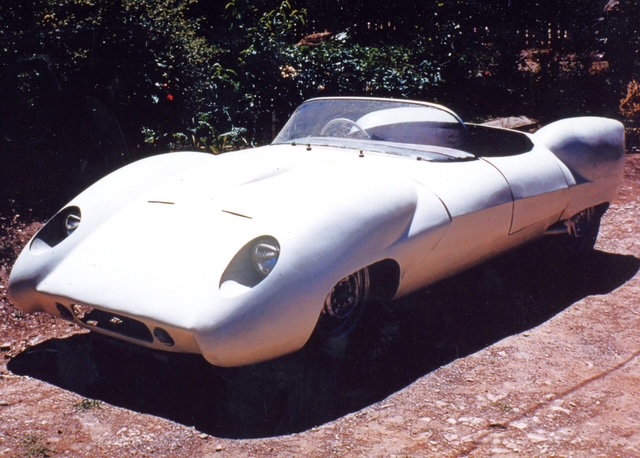
When later owned by Victorian racer, John Ampt, the Decca Special was borrowed by a couple of young aviation mechanics in Castlemaine, Melvil Wilkinson and Ron Devereaux. They took a mould of the aluminium body and copied the spaceframe, intending to go into Decca production. One of the resulting two body/frame copies was bought by 21-year-old local, Doug Palling. A Morris Major, written off close to the family farm, provided many of the remaining bits required. Hence the name Decca Major.
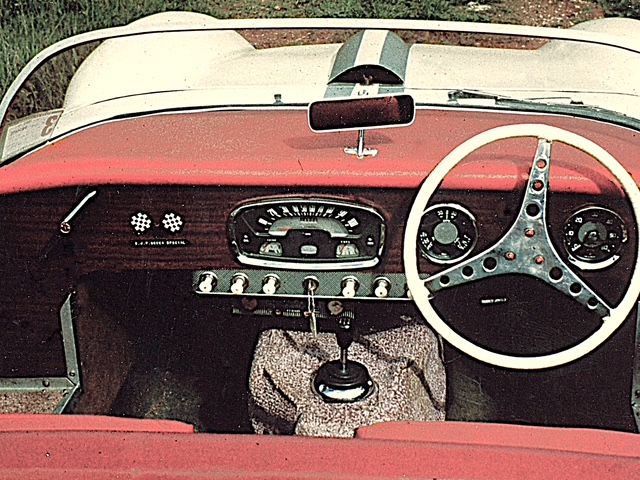
The finished machine was registered for road use in March 1961 and must have looked like a UFO to other rural Victorian motorists. Doug ran the car in local speed events such as hill climbs and sprints with moderate success, and it remained road registered for about nine years. In 1971 it was advertised for sale in Sports Car World and subsequently went through several hands, in an increasingly parlous state. While running without the front half of the body, it apparently hit an ambulance at a country hill climb.
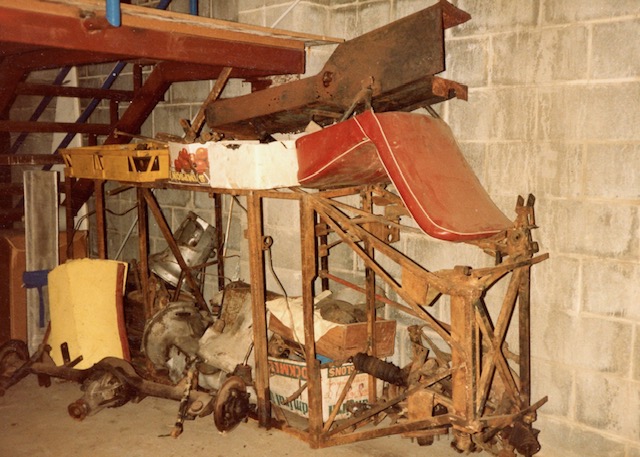
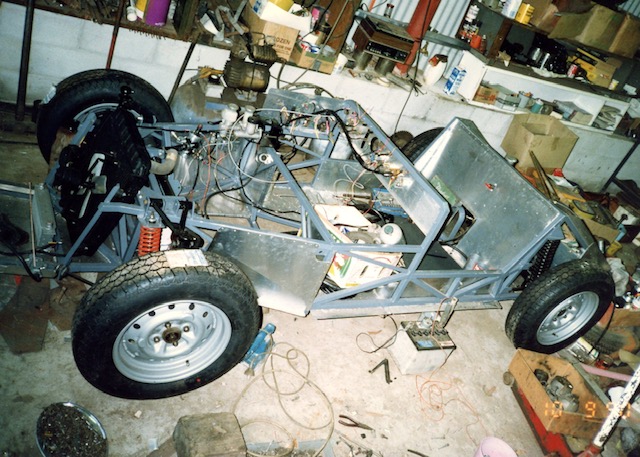
Former Historic Sports and Racing Car Association president, Mike Gunnell, bought the remaining collection of parts in 1988 and organised an excellent restoration. Bob Winley did the spaceframe, brakes and electrics, Rob Rowe the engine and Jim Bennett the body, which proved a challenge. Doug Palling was a huge help in this project. The resurrected Decca Major duly received a Confederation of Australian Motorsport logbook and certificate of description in 1992 and was soon running at historic events in Mike’s capable hands.
The first time I saw the car was at the fuel bowser at an Amaroo Park historic event, where Mike gave me a rundown of the car’s history. Some years later, Patrick Quinn asked for ideas on historic racing cars to test for an Australian Classic Car story. I suggested the Thompson Sports, Lola Mk1 copy, then raced very effectively by Ray Kenny, and Mike’s Decca Major. Patrick’s article appeared in the December 1997 issue. Towards the end, he quoted Mike Gunnell as saying he was thinking of selling the Decca. This lodged firmly in my mind. I started talking to Mike about taking over custodianship.
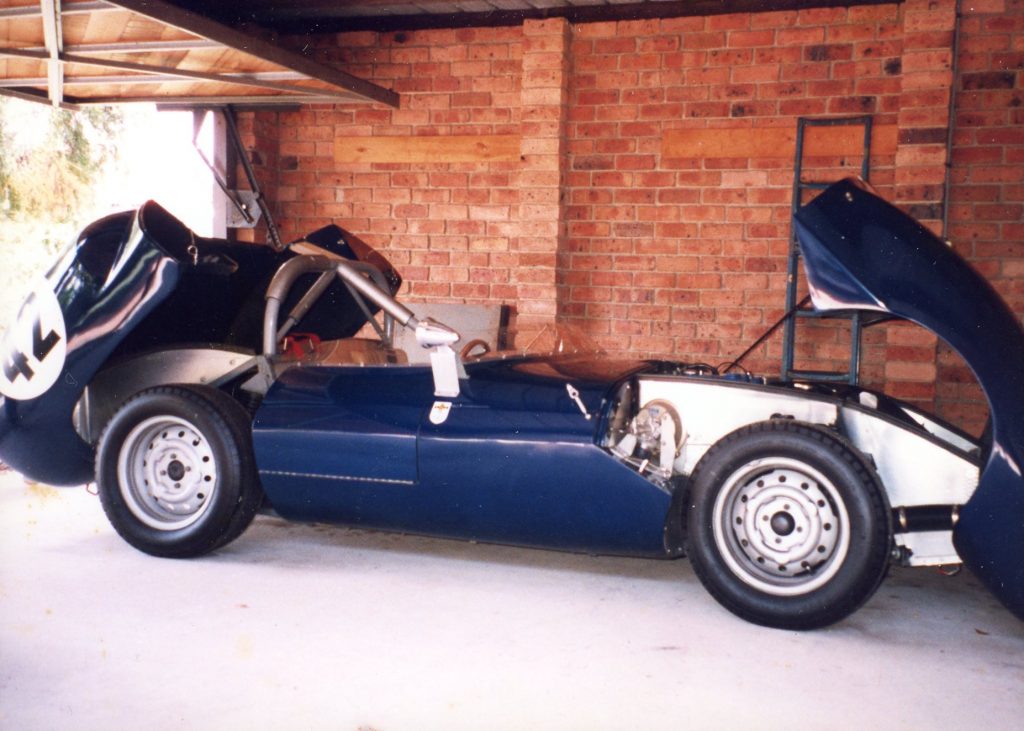
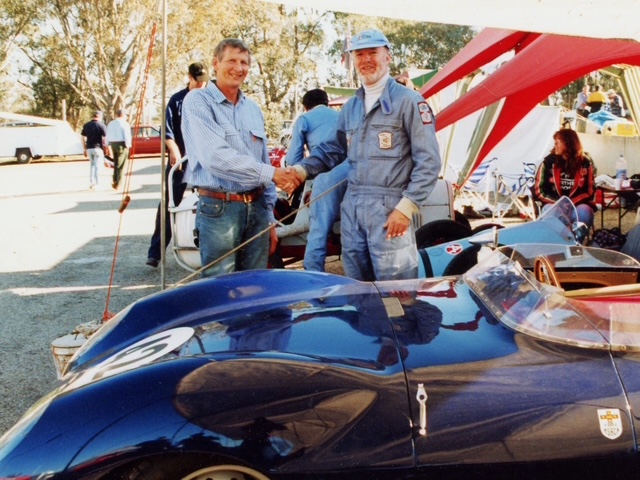
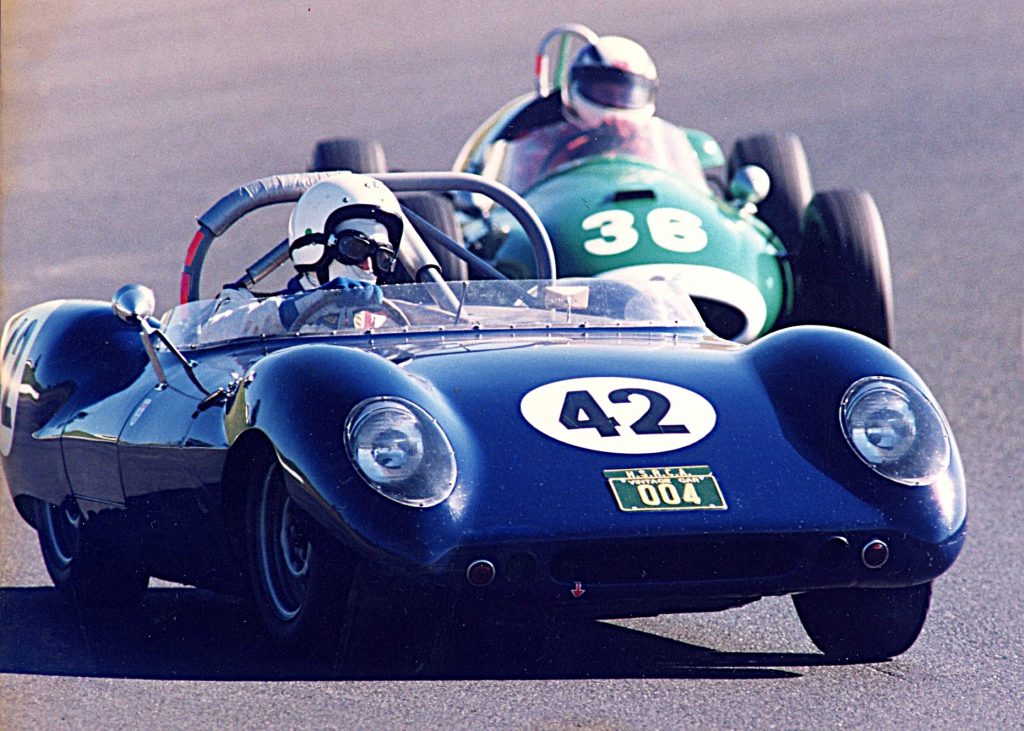
I’d been running my Triumph TR3A in regularity at historic events. Finally buying the Decca in January 1999, I stepped up to racing. I found this scary, but of course, very satisfying. On many occasions when Mike raced the Decca, Bob Winley also drove it in regularity at the same event. I spoke to my good friend, Gil Skidmore from Sydney Vintage Restorations, about doing the same. Having the support of the whole Skidmore family at events made for a lot of fun. Gil, a better driver than me, was usually a couple of seconds faster.
Not too long into my ownership we broke a crankshaft, naturally enough requiring a full engine rebuild. Another friend, Percy Hunter advised I should get a steel crank made. This seemed several financial bridges too far and we went with what seemed to be the best cast option. Not long after, however, and at not particularly high revs, the ‘new’ crank also broke. Percy said “John, you really should get a steel crank”.
That still seemed out of reach, and further thought went into the type of crank and harmonic balancer. When the third crank broke, Percy announced, “I’ll get a steel crank made for you and rebuild the engine.” In case it is not already obvious, Percy is a wonderful person.
The steel crank was made by Sainty Engineering and would grace a sculpture exhibition. Percy took me out to Sainty’s when it was being made, and it looked superb just sitting in the lathe. To my shock when I dug out the paperwork, the crank was 23 years old, and in all that time, there’d not been any real problem with the engine.
When I realised the compression was down about 30psi in one cylinder, I mentioned this to David Williamson during one of our volunteer sessions at the Australian Motor Heritage Foundation (AMHF). As quick as a flash, he said, ‘it will be the head. I’ll rebuild it for you if you just pay for the parts’. A most generous offer. It took me some time to accept that the engine really needed to come apart. Andrew Dodd, another friend, also offered to help. Since Andrew is a retired mechanical engineer, that really meant I would hold the torch and look for the right size spanner while he did the actual work.
Dave was initially just reconditioning the head. The bores looked fine. While working on the head, Dave asked if I could also pull the cam followers out to be sure they were okay. History records that one of the cam followers was broken, and a number were badly pitted. This meant a full engine rebuild was required, and Dave offered to take that on as his last engine job before moving from his current house, with its extensive workshop, into a home unit.
(Next up, the story of the engine rebuild, by Dave Williamson.)
