by David Burrell – – –
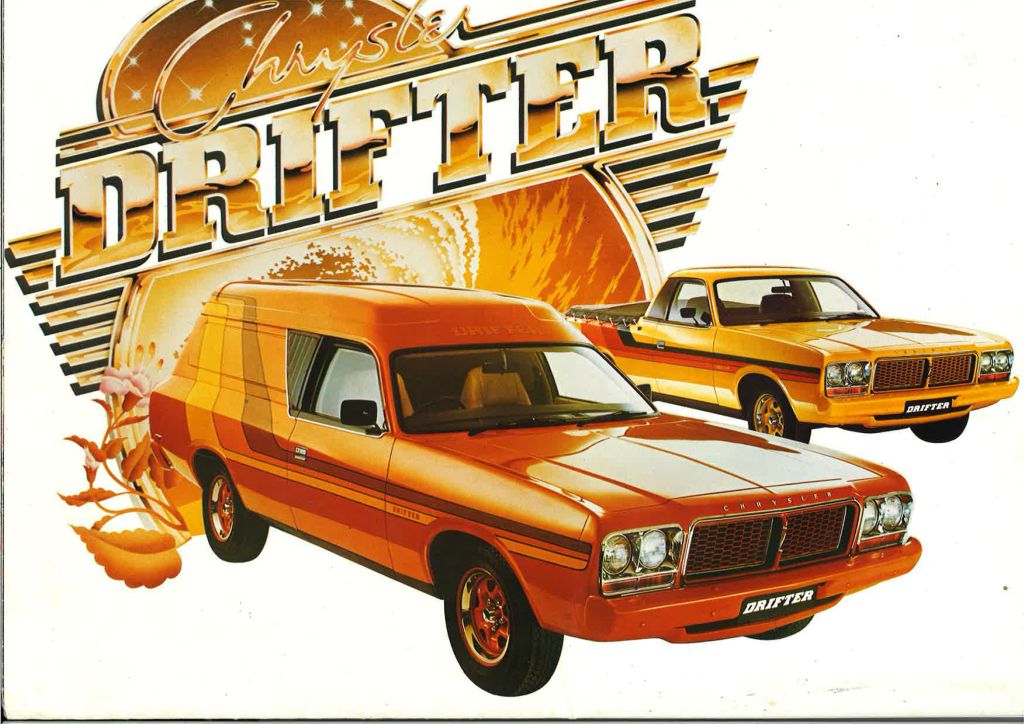
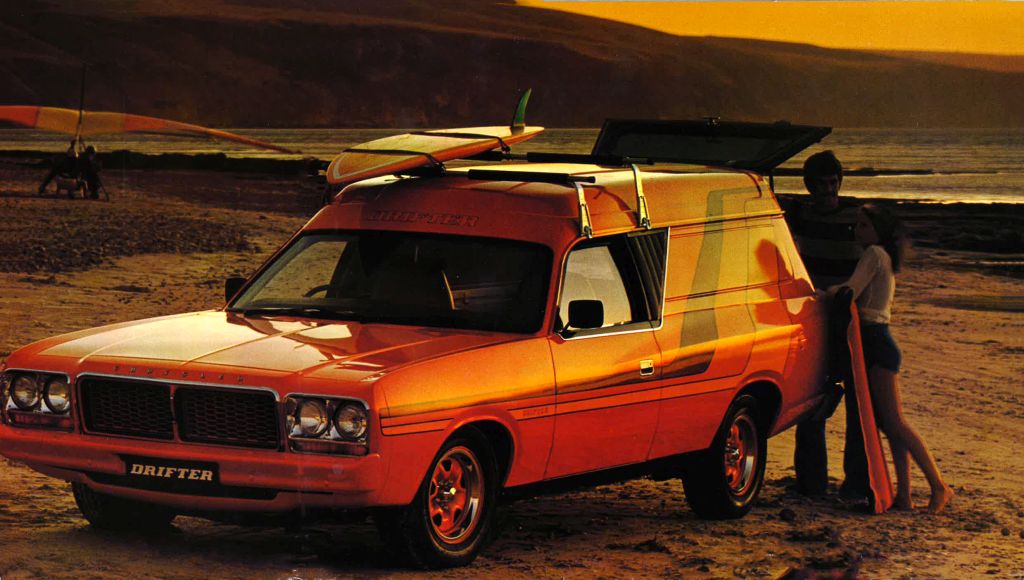
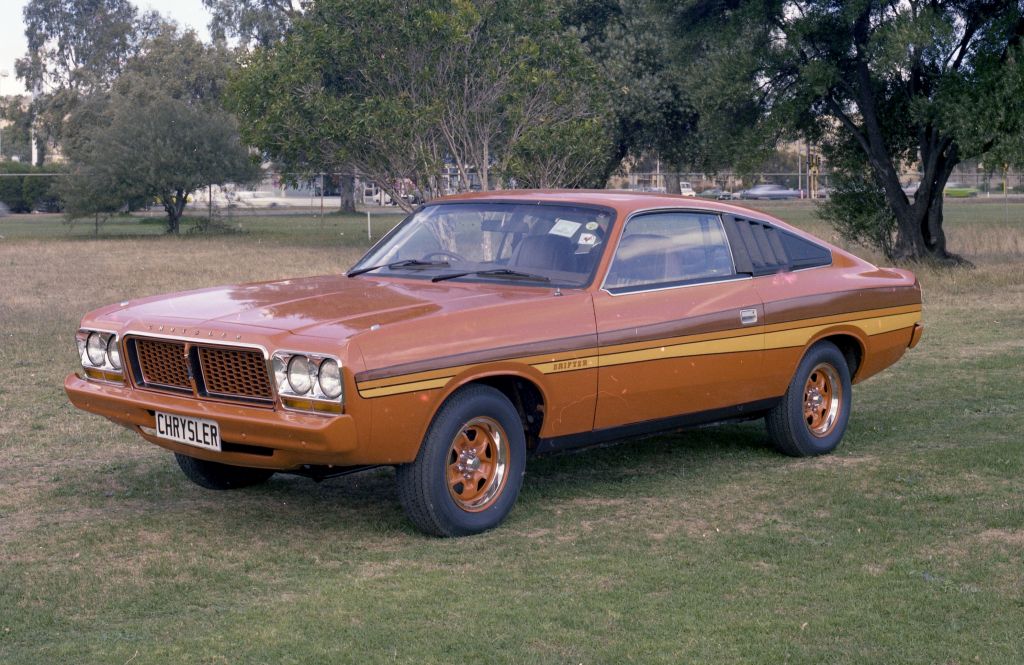
Between April 1977 and November 1978, Chrysler Australia rode the waves of surf culture with its Drifter panel van, ute, and, of all things, the Charger.
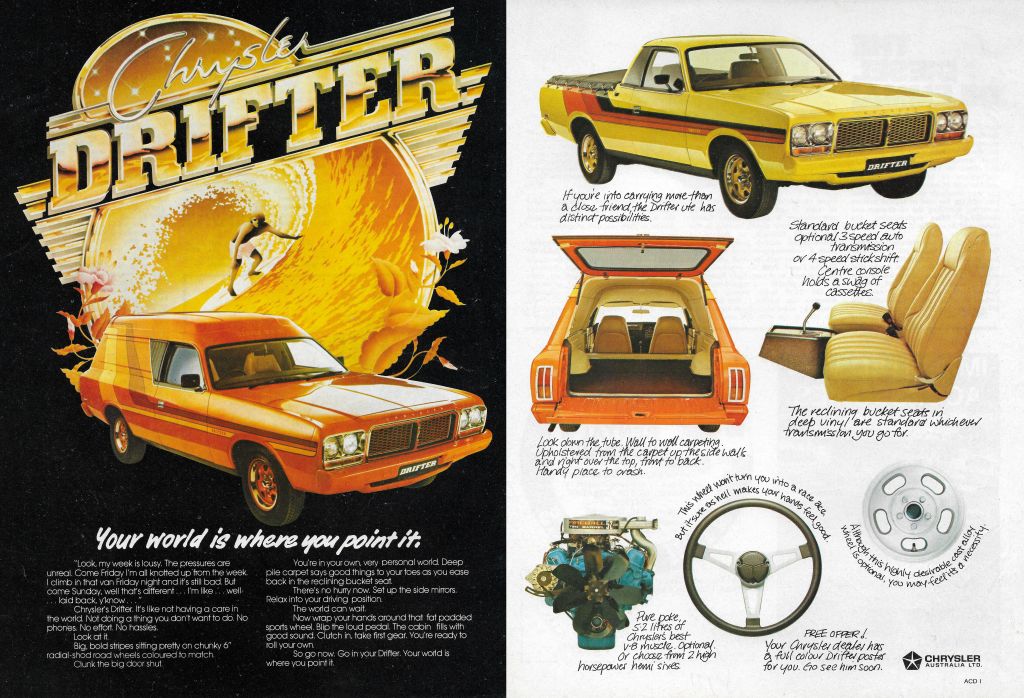
Like Holden’s Sandman and Ford’s Sundowner, the Drifter’s advertisements promised an endless summer – leisure, freedom, power, speed, sea, surf and sex – no matter how far you lived from a beach.
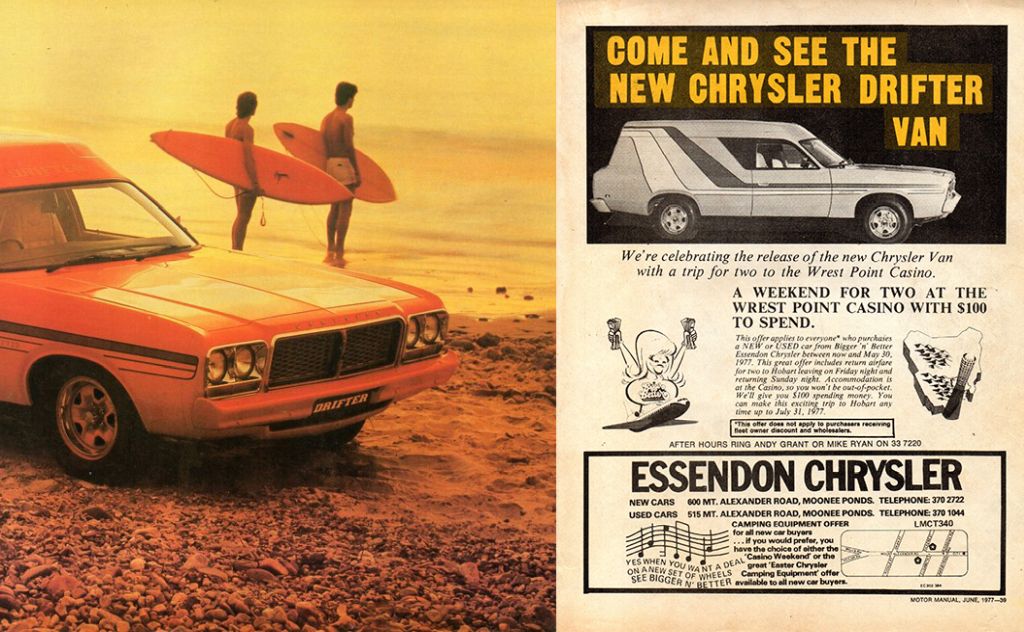
The Drifter van and ute were fast-tracked creations. I spoke with Chrysler/Mitsubishi Australia’s retired design manager, Dennis Nicolle, about how they were developed. Dennis recalls:
“We needed a surf type vehicle fast. Because we were third on the scene, we had to have something that stood out. We gave it bold colours, big stripes, carpet in the back, bucket seats and a Charger grille.”
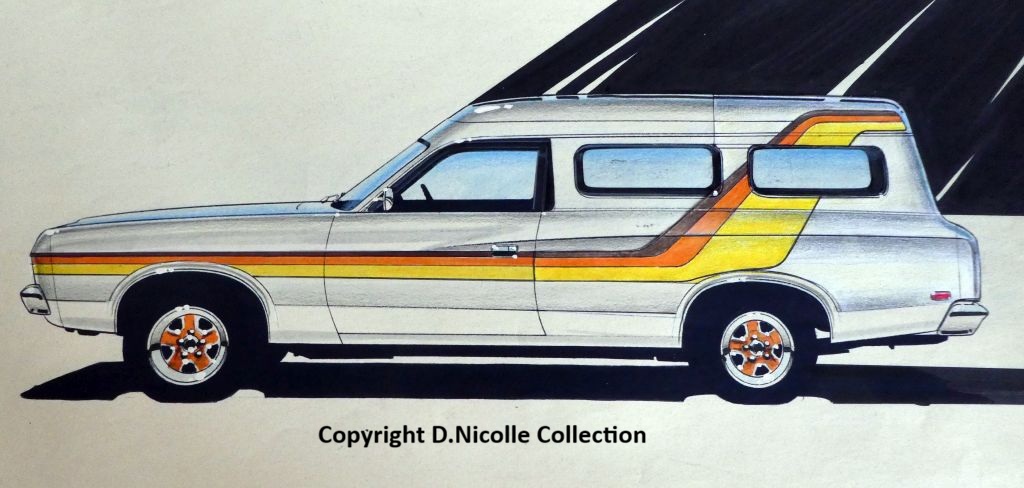
Chrysler’s design team sketched dozens of stipe combinations and Dennis has shared with the AMHF a number of examples from his personal collection.
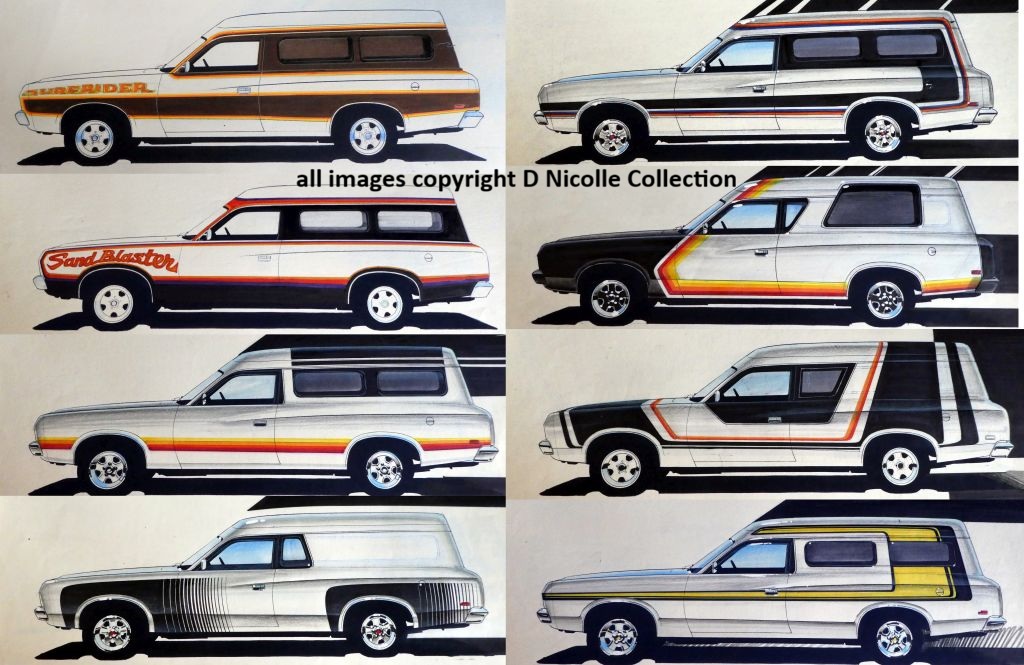
When reviewing all the sketches, Dennis thought the right-angled stripes which turned upwards had the most visual impact. Trouble was, they made the van look too high and bulky. Thinking about it more, he took inspiration from the tail of a Qantas 747. He says:
“I saw how the flying kangaroo was silhouetted against the red paint of the tail. It was swept up at an angle and really lifted the look of the plane. I did some sketches. Instead of the stripe having a right angle bend up the side of the vehicle, I angled it. And that’s how the Drifter got its stripes.”
By the time the Drifter was released the surf van/ute craze had peaked. Less than 500 Drifter vans and utes were sold.
The name was also applied to some of the last Charger body shells.
And yet, despite its late entry, short time on the market and low sales numbers, the Drifter’s rarity, blazing graphics and bright colours has ensured its place in our popular culture.